
KISSPEPTIN has become an important subject in modern endocrine and reproductive research. Scientists continue to investigate KISSPEPTIN because of its role in hormonal signaling and its connection to the body’s natural reproductive system. As research into peptide biology expands, laboratories are focusing on compounds that help explain how hormones communicate and maintain biological balance.
Interest in hormonal regulation has increased significantly over the past decade. Researchers now study the complex communication networks that control endocrine function rather than examining individual hormones in isolation. Within this growing field, KISSPEPTIN has earned recognition as a valuable research peptide with broad scientific applications.
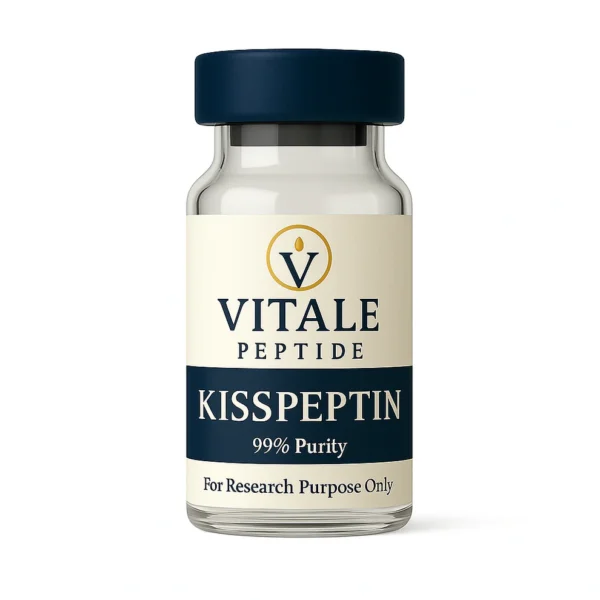
KISSPEPTIN is a naturally occurring peptide that plays a central role in the communication between the brain and the reproductive endocrine system. Scientists study this peptide because it helps regulate signaling pathways that influence the release of reproductive hormones.
Researchers value KISSPEPTIN because it acts as an upstream regulator within the endocrine system. Instead of working alone, it interacts with several biological pathways that contribute to normal hormonal communication. This unique function has made it one of the most widely investigated peptides in reproductive science.
Scientists continue exploring KISSPEPTIN because hormonal signaling remains one of the most complex areas of human biology. Understanding how endocrine pathways communicate helps researchers improve their knowledge of reproductive physiology and hormonal regulation.
Current laboratory studies examine how this peptide participates in cellular signaling, endocrine communication, and neuroendocrine regulation. These investigations continue to expand scientific understanding while creating new opportunities for future discoveries in peptide research.
As additional research becomes available, interest in KISSPEPTIN continues to grow across multiple scientific disciplines.
The endocrine system depends on precise communication between different organs and glands. Small changes in signaling pathways can influence many biological processes. Researchers therefore study compounds that help explain how these systems remain coordinated.
KISSPEPTIN has become an important focus because it is closely associated with signaling pathways that regulate reproductive hormone activity. Scientists continue investigating how this communication network operates under normal physiological conditions.
These studies contribute valuable information to the broader understanding of endocrine biology and hormonal regulation.
Modern neuroscience and endocrinology often overlap. Researchers investigate how the brain communicates with hormone-producing glands through specialized signaling molecules.
Within this field, KISSPEPTIN serves as an important research tool for examining interactions between the hypothalamus, pituitary gland, and reproductive system. Scientists continue exploring these pathways to better understand how hormonal balance is maintained throughout different stages of life.
Because these biological systems are highly interconnected, research involving this peptide continues to expand.
Reproductive biology remains one of the fastest-growing areas of biomedical research. Scientists seek to understand the biological mechanisms that regulate reproductive development and hormonal function.
Research involving KISSPEPTIN helps investigators examine signaling pathways involved in reproductive physiology. These studies improve scientific knowledge of endocrine communication while supporting future research into hormone regulation.
As laboratories continue investigating reproductive biology, this peptide remains a valuable compound for experimental research.
Every successful scientific investigation begins with dependable research materials. Laboratories conducting studies involving KISSPEPTIN prioritize products that meet strict standards for purity, consistency, and stability.
Reliable manufacturing processes and appropriate storage conditions help reduce variation during experiments. These quality measures allow researchers to generate accurate and reproducible data while maintaining confidence in their findings.
For this reason, sourcing research-grade materials remains essential for peptide laboratories around the world.
Scientific interest in KISSPEPTIN continues to expand as researchers discover new aspects of endocrine communication. Future investigations are expected to explore additional biological pathways connected to hormonal regulation, reproductive physiology, and neuroendocrine signaling.
As technology improves, scientists will gain more opportunities to examine these complex interactions at the molecular level. This continued research is likely to strengthen the importance of KISSPEPTIN within peptide science.
KISSPEPTIN has become a key peptide in endocrine and reproductive research because of its central role in hormonal communication. Its connection to neuroendocrine signaling and reproductive biology has made it an important subject in laboratories worldwide.
As researchers continue exploring the mechanisms that regulate hormonal balance, KISSPEPTIN remains a valuable research compound with broad scientific relevance. Ongoing investigations will continue expanding our understanding of endocrine biology and peptide science.
KISSPEPTIN is supplied strictly for laboratory research purposes only. It is not intended for human consumption, diagnosis, treatment, cure, or prevention of disease. All information provided is for educational and scientific research purposes only.
for more information, visit our website: vitalepeptide.com