
Few compounds in the research peptide space generate as much search interest as BPC-157. Researchers, students, and laboratory professionals search for it more than almost any other non-metabolic peptide on the market. So, what explains this level of attention? This guide breaks down what BPC-157 is, why the research community nicknamed it the “Wolverine peptide,” and what the pre-clinical literature actually documents about its mechanism.
Buy Research-Grade BPC-157 from Vitale Peptide →
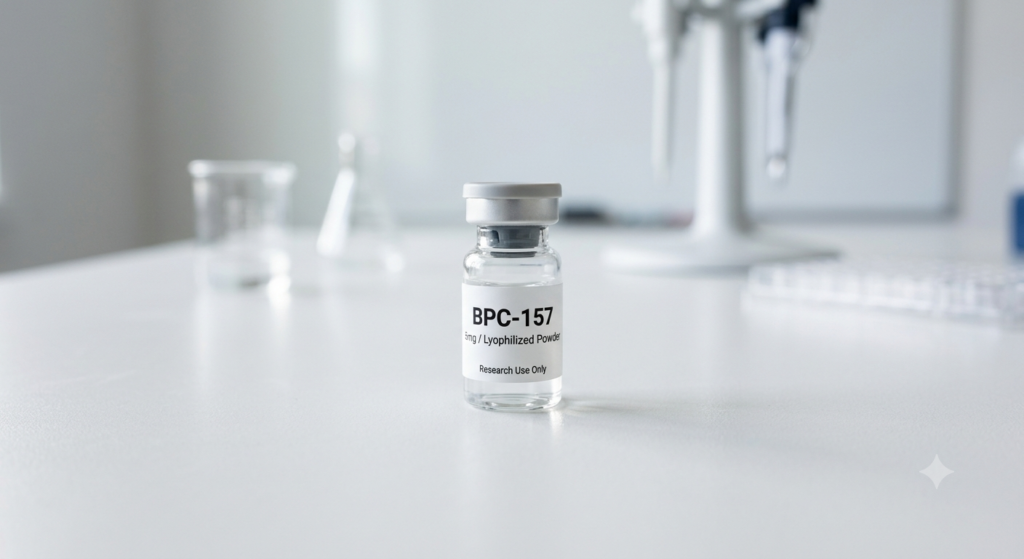
Vitale Peptide intends all products referenced in this article strictly for laboratory and in-vitro research use. None of them are intended for human consumption.
BPC-157 stands for Body Protection Compound-157. Researchers derive this synthetic pentadecapeptide, meaning a 15-amino-acid chain, from a protective protein sequence naturally found in gastric juice. Scientists in Croatia first identified the parent compound decades ago, and they later isolated the stable, active fragment now known as BPC-157.
Because of its gastric origin, early research focused heavily on gut-related pathways. However, later studies expanded into a much broader range of tissue systems, which is exactly why BPC-157 attracts so much ongoing research interest today.
The nickname comes from a simple observation in pre-clinical literature: BPC-157 appears across an unusually wide range of tissue-repair studies. Researchers have examined it in models involving tendons, ligaments, muscle, bone, nerve tissue, and the gastrointestinal lining. Because this breadth resembles the rapid, multi-system healing associated with the fictional character Wolverine, the name stuck within research communities.
This reputation also stems from how frequently researchers pair BPC-157 with TB-500 in combination studies. The two peptides target overlapping but distinct repair pathways, and Vitale Peptide offers this specific combination as a BPC-157 / TB-500 Blend for laboratories studying both mechanisms together.
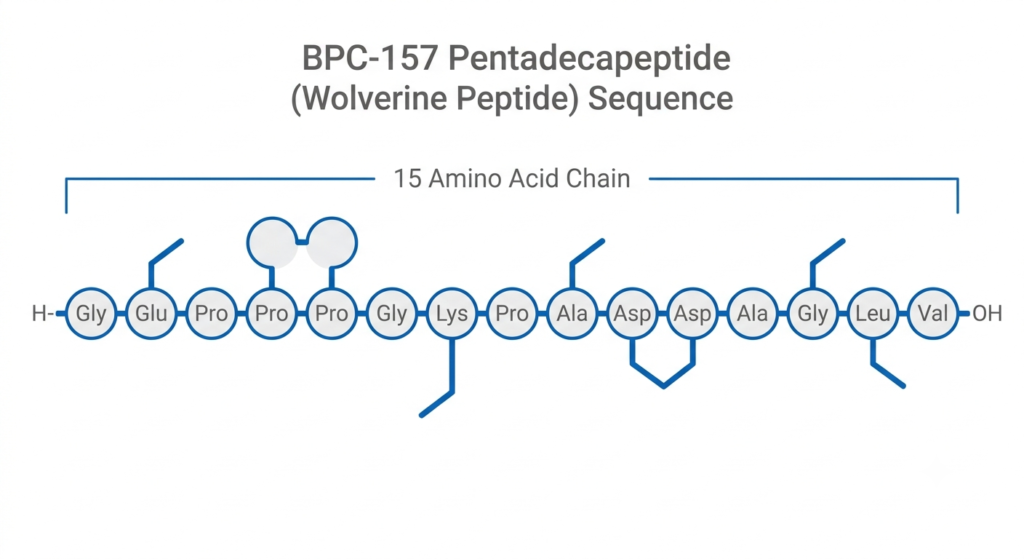
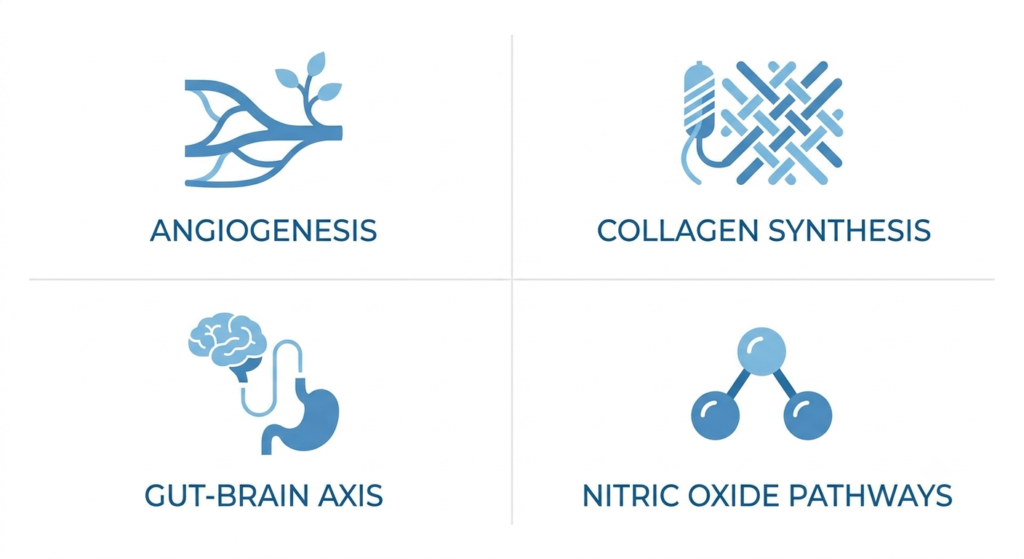
The most well-documented mechanism in BPC-157 research involves angiogenesis, the formation of new blood vessels. Studies indicate that BPC-157 may upregulate vascular endothelial growth factor (VEGF) expression, a signaling protein central to blood vessel formation. Because tissue repair depends heavily on adequate blood supply, this angiogenic activity forms the foundation for much of the broader research interest in the peptide.
Researchers have also studied BPC-157’s relationship to collagen synthesis and fibroblast activity. Fibroblasts play a central role in producing the connective tissue matrix needed for wound and tissue repair. Consequently, this research area connects closely to studies on tendon, ligament, and skin-related models.
Given its gastric origin, BPC-157 has also drawn attention within gut-brain axis research. Some studies suggest the peptide may interact with serotonergic and dopaminergic signaling systems, which has led researchers to examine its relevance to models exploring the relationship between gastrointestinal health and neurological signaling.
Additional research has explored BPC-157’s influence on nitric oxide pathways. Because nitric oxide plays a role in blood vessel dilation and inflammatory signaling, this research intersects with the angiogenesis and tissue-repair studies described above.
Several factors explain why BPC-157 consistently ranks among the most-searched and most-studied research peptides. First, its multi-system mechanism gives researchers a wide range of experimental applications, from musculoskeletal models to gastrointestinal studies. Second, the compound demonstrates notable stability, which makes it practical to work with across different laboratory conditions. Third, decades of accumulated pre-clinical literature give researchers a substantial body of prior data to build upon.
Because of this combination, BPC-157 remains a frequent reference point across regenerative and tissue-repair research, comparable in relevance to how GHK-Cu has become a reference point for copper-peptide research into cellular repair pathways.
Within the broader catalog of tissue-repair peptides, researchers frequently draw comparisons between BPC-157 and TB-500. While BPC-157 research centers heavily on angiogenesis and gastrointestinal pathways, TB-500 research focuses more on cell migration, differentiation, and inflammatory response signaling. Because the two mechanisms complement each other, many laboratories study them in parallel or combined protocols.
Researchers also study GHK-Cu within this same regenerative research category, since it explores copper-dependent cellular repair pathways relevant to skin and connective tissue models.
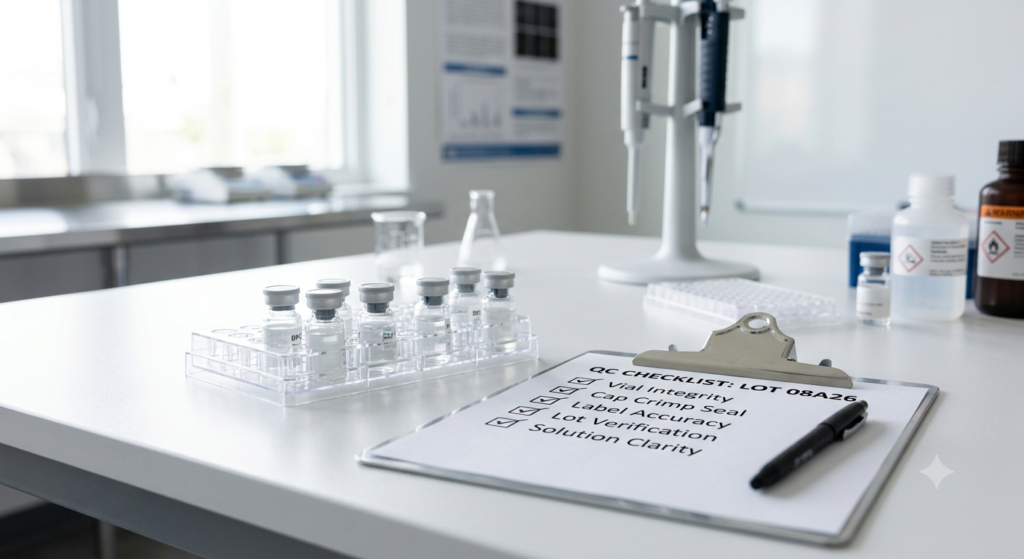
Peptide purity and batch consistency directly affect the reliability of research outcomes. Variability in synthesis, storage, or handling can introduce confounding variables into experimental data. As a result, laboratories increasingly prioritize suppliers who demonstrate rigorous quality controls.
At Vitale Peptide, we source and handle every batch according to strict quality standards. This helps ensure purity, identity, and consistency across the board. Ultimately, this commitment allows researchers to focus on experimental design rather than questioning material reliability. The same standard applies across our full catalog, from tissue-repair peptides like BPC-157 to metabolic research compounds like MOTS-c and NAD+.
What does BPC-157 stand for? BPC-157 stands for Body Protection Compound-157, a synthetic pentadecapeptide derived from a protein sequence found in gastric juice.
Why is BPC-157 called the “Wolverine peptide”? Researchers use this nickname because BPC-157 appears across an unusually wide range of tissue-repair studies, spanning tendons, ligaments, muscle, bone, and gut tissue.
What mechanism does BPC-157 research focus on? Research primarily explores angiogenesis and VEGF pathway activity, alongside collagen synthesis, fibroblast activity, gut-brain axis signaling, and nitric oxide pathway modulation.
Why do researchers often study BPC-157 alongside TB-500? The two peptides target overlapping but distinct repair mechanisms. Researchers frequently study them together to examine complementary tissue-repair pathways.
Is BPC-157 approved for human use? No. Vitale Peptide intends BPC-157, like every product in our catalog, strictly for laboratory research. We do not approve or intend it for human consumption.
Vitale Peptide supplies a full catalog of research-grade compounds for laboratories and institutions, including:
Vitale Peptide manufactures and supplies premium research-grade BPC-157 with precision, consistency, and integrity for laboratory use.
Vitale Peptide sells all products strictly for research purposes. We do not intend them for human consumption, diagnostic, or therapeutic use.