
Sermorelin has become one of the most widely studied peptides in growth hormone research due to its selective mechanism of action and its relevance in metabolic and aging-related investigations. Researchers continue to explore Sermorelin because of its ability to support studies involving natural growth hormone signaling, cellular repair, and overall physiological function.
As peptide science continues to evolve, laboratories are increasingly focusing on compounds that help researchers better understand the body’s own biological processes rather than replacing them. This growing scientific interest has positioned Sermorelin as a valuable research peptide for investigations involving endocrine function, metabolism, and healthy aging.
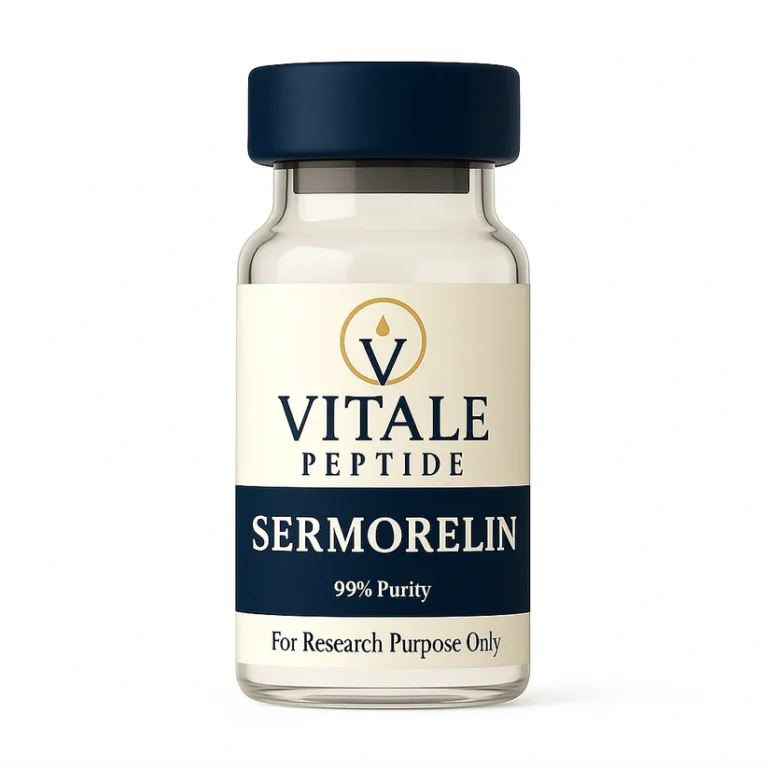
Sermorelin is a synthetic peptide that represents the first 29 amino acids of Growth Hormone-Releasing Hormone (GHRH). Rather than acting as growth hormone itself, researchers study Sermorelin because it stimulates the body’s natural growth hormone signaling through the pituitary gland.
This selective mechanism has made the peptide an important subject in laboratory studies. Scientists are interested in understanding how natural hormone signaling may influence recovery, body composition, cellular maintenance, and metabolic activity while preserving normal physiological feedback systems.
One reason Sermorelin remains highly relevant in scientific research is its connection to natural hormone regulation. Unlike compounds that directly replace hormones, it is being investigated for its ability to encourage normal biological pathways associated with growth hormone release.
Current research continues to examine how this signaling process may influence tissue maintenance, muscle biology, protein synthesis, metabolic balance, and age-related physiological changes. Because these systems are interconnected, Sermorelin has become a key focus in multiple areas of peptide research.
Growth hormone influences numerous biological processes throughout the body, including cellular maintenance, tissue development, and metabolic regulation. Researchers use Sermorelin to better understand how stimulating natural growth hormone pathways may affect these important functions.
Rather than introducing external growth hormone, scientists investigate how the body’s own regulatory systems respond to targeted stimulation. This approach has made Sermorelin especially valuable in endocrine research and studies involving hormonal balance.
Metabolic research continues to expand as scientists investigate factors that influence energy production and body composition. Sermorelin has attracted attention because growth hormone signaling is closely associated with lean tissue development, fat metabolism, and overall metabolic efficiency.
Researchers are exploring whether improved hormone regulation may contribute to healthier metabolic function and more efficient energy utilization. These investigations continue to increase scientific interest in the peptide.
Aging research has become one of the fastest-growing areas in modern biomedical science. Researchers are studying Sermorelin to better understand how natural hormone activity changes over time and how these changes influence cellular performance.
Laboratory investigations frequently examine connections between hormone signaling, tissue maintenance, recovery mechanisms, and overall physiological function. As interest in healthy aging continues to grow, this peptide remains an important research tool for scientists exploring these complex biological systems.
Reliable scientific outcomes depend on the consistency and quality of research materials. Laboratories conducting studies involving Sermorelin typically prioritize high-purity peptides manufactured under strict quality standards.
Proper storage, verified production methods, and batch consistency all contribute to reproducible experimental results. Researchers recognize that dependable materials are essential for generating accurate scientific data and advancing peptide research.
Scientific interest in Sermorelin continues to expand as researchers gain a deeper understanding of growth hormone biology and endocrine regulation. Future studies are expected to investigate additional applications involving metabolism, cellular health, recovery mechanisms, and age-related biological changes.
As peptide science advances, this compound is likely to remain an important subject in laboratory investigations focused on understanding natural hormone signaling and long-term physiological health.
Sermorelin continues to play a significant role in growth hormone and metabolic research because of its selective mechanism and broad scientific relevance. Its connection to natural hormone signaling, healthy aging investigations, and metabolic studies has made it one of the most respected peptides in modern laboratory research.
For researchers interested in endocrine biology, cellular maintenance, and hormone regulation, Sermorelin remains a valuable peptide with considerable scientific potential.
Sermorelin is supplied strictly for laboratory research purposes only. It is not intended for human consumption, diagnosis, treatment, cure, or prevention of disease. All information provided is for educational and research purposes only.
for more information, visit our website: vitalepeptide.com